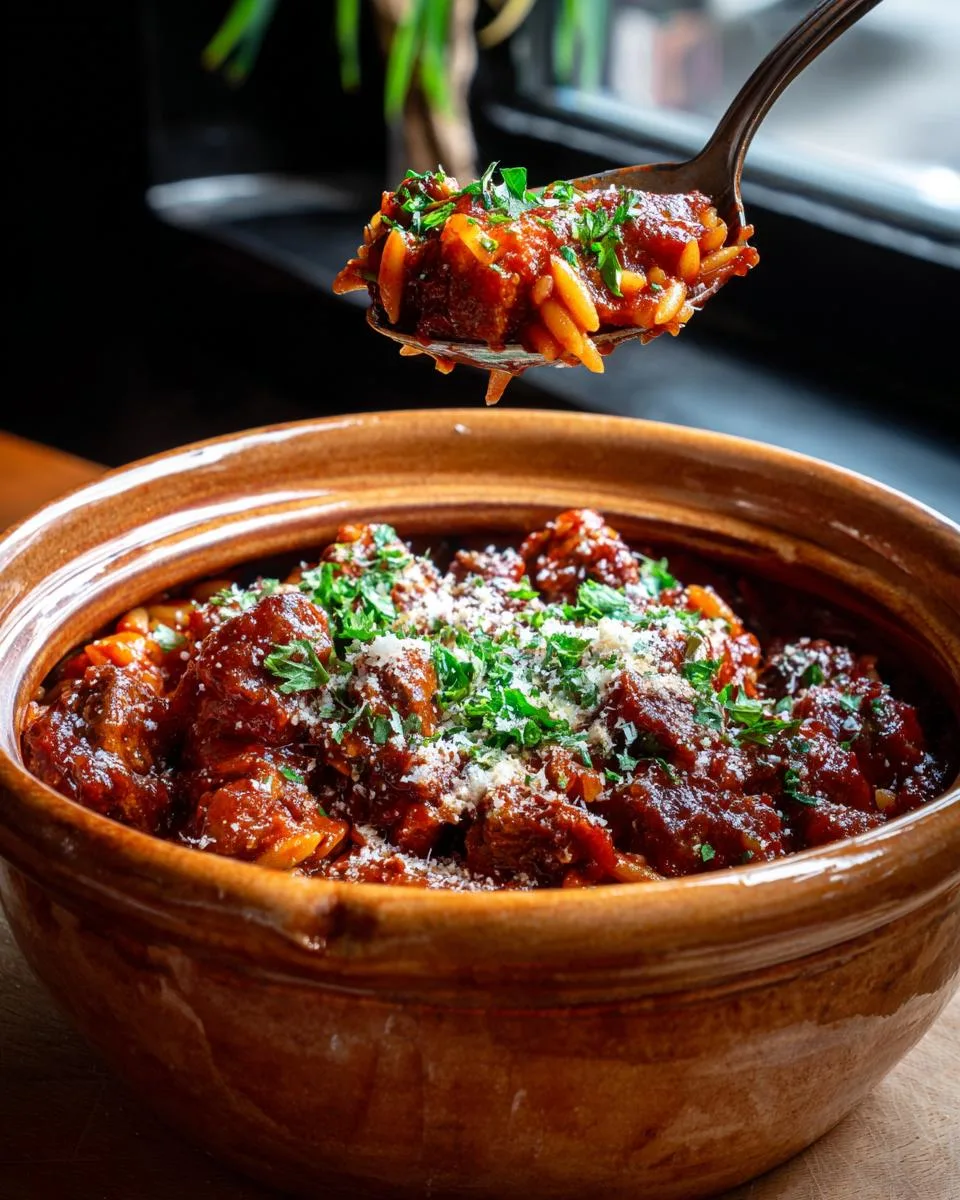
There’s nothing quite like the smell of Beef Giouvetsi bubbling away on the stove—it’s the kind of meal that fills your kitchen with warmth and makes everyone hover nearby, asking, “Is it ready yet?” This Greek classic is my go-to when I want something hearty, flavorful, and oh-so-satisfying. My yia-yia (that’s Greek for grandma) used to make it for Sunday dinners, and now it’s my turn to carry on the tradition. Tender beef, rich tomato sauce, and perfectly cooked orzo—all in one pot? That’s magic right there. Trust me, once you try it, you’ll be hooked.
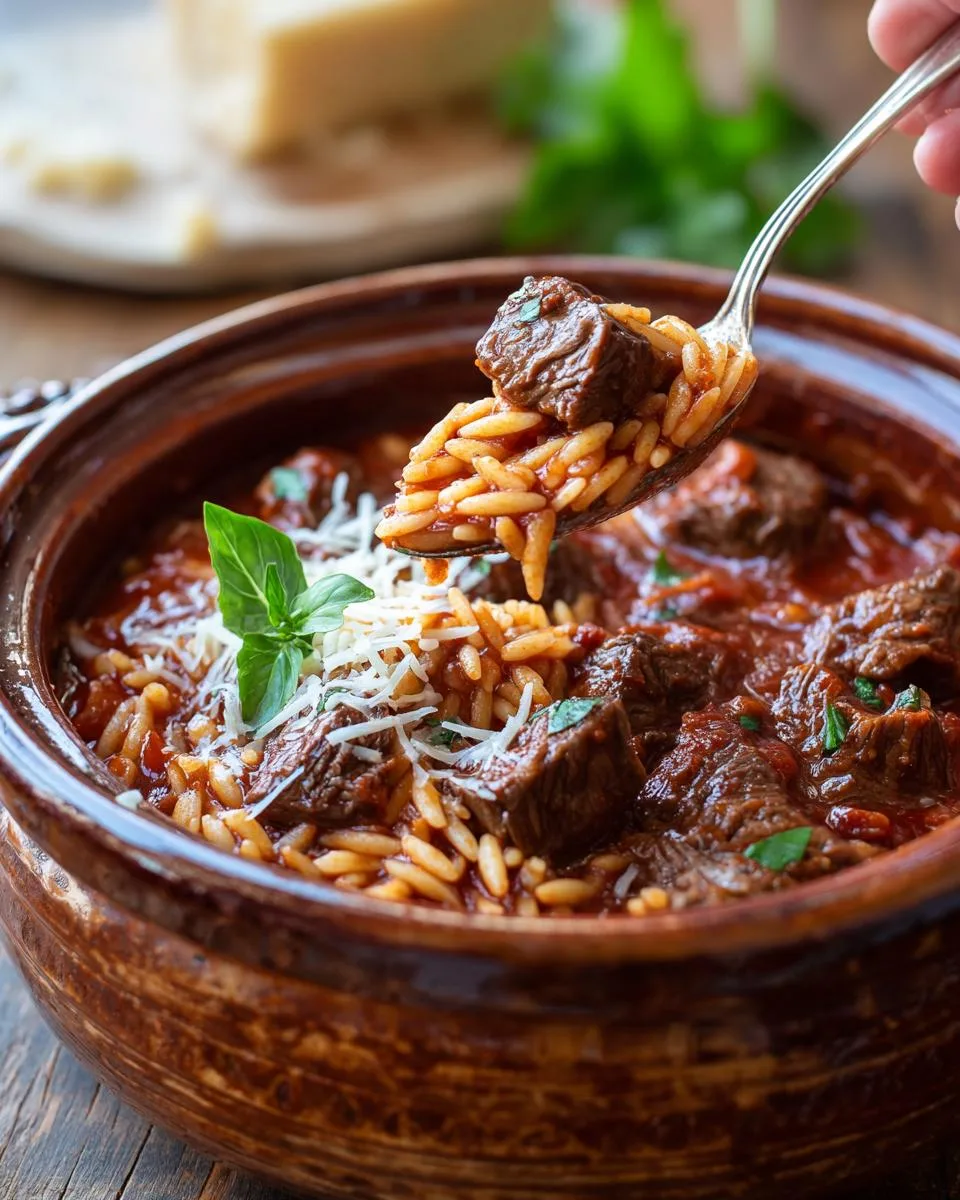
Table of Contents
Table of Contents
Why You’ll Love This Beef Giouvetsi
Let me tell you why this dish has been a family favorite for generations:
- One-pot wonder: Minimal cleanup means more time enjoying your meal (and maybe even seconds!)
- Comfort in every bite: Tender beef meets rich tomato sauce with just the right hint of cinnamon and allspice
- Perfect for leftovers: The flavors get even better overnight – if there’s any left!
- Versatile: Serve it straight from the pot for casual dinners or dress it up with cheese for company
Honestly, it’s the kind of meal that makes people ask for the recipe before they’ve even finished their first plate.
Ingredients for Beef Giouvetsi
Here’s what you’ll need to make this Greek comfort food magic happen:
- The Beef: 2 lbs (900 g) beef chuck or stew meat, cut into 1-inch cubes (trust me, chuck is worth it for tenderness)
- Aromatics: 1 large onion (finely chopped – this isn’t the time for chunky pieces), 3 garlic cloves (minced)
- Tomato Goodness: 1 can (14 oz) crushed tomatoes, 2 tbsp tomato paste (that little tube in your fridge works great)
- Liquids: 1 cup beef broth (homemade if you’ve got it!), plus 2 cups hot water or additional broth for cooking the orzo
- Spice Magic: 1 cinnamon stick (yes, stick – it’s easier to remove later), 2 bay leaves, 1 tsp ground allspice (don’t skip this – it’s key!), salt and pepper to taste, 1 tsp sugar (optional but helps balance the tomatoes)
- The Pasta: 1 ½ cups orzo (no substitutions here – the tiny rice-shaped pasta is essential)
- Finishing Touches: Grated Kefalotyri cheese or Parmesan (for sprinkling), fresh parsley (for that pop of color)
Ingredient Notes & Substitutions
Don’t panic if you can’t find everything exactly – here’s how to adapt:
- Cheese Swap: Can’t find Kefalotyri? Parmesan works beautifully (my yia-yia would gasp, but we’ll keep it our little secret)
- Tomato Options: Out of crushed tomatoes? Tomato sauce will work in a pinch (though the texture will be slightly smoother)
- Broth Basics: No beef broth? Chicken broth or even water will do, but the flavor won’t be quite as rich
- Spice Shortcuts: If you don’t have a cinnamon stick, ½ tsp ground cinnamon stirred into the sauce works (just add it with the other spices)
- No Allspice? Mix ½ tsp cinnamon + ¼ tsp nutmeg + ¼ tsp cloves for a similar warm flavor
Remember – the best Beef Giouvetsi comes from using what you’ve got while staying true to the spirit of the dish. Now let’s get cooking!
How to Make Beef Giouvetsi
Alright, let’s get cooking! This is where the magic happens – turning simple ingredients into something truly special. Follow these steps and you’ll have a pot of Greek comfort that’ll make your kitchen smell incredible.
Step 1: Sear the Beef
First things first – let’s get that beautiful crust on our beef. Here’s my foolproof method:
- Pat your beef cubes dry with paper towels (this is crucial for good browning!)
- Heat olive oil in your Dutch oven over medium-high until it shimmers
- Add beef in a single layer – no crowding! (I do this in 2-3 batches)
- Let it sit undisturbed for 2-3 minutes per side until you get that gorgeous brown crust
- Remove beef and set aside (don’t worry about the browned bits – that’s flavor gold!)
Pro tip: If your beef starts steaming instead of browning, your pan’s too crowded. Just remove some pieces and keep going!
Step 2: Build the Sauce
Now we’ll create the flavor foundation for our Giouvetsi:
- In the same pot (with all those delicious browned bits), sauté onions until translucent – about 3-4 minutes
- Add garlic and cook just until fragrant – 30 seconds max (we don’t want bitter garlic!)
- Stir in tomato paste and cook for 1-2 minutes (this “blooms” the flavor – trust me, it makes a difference)
- Add crushed tomatoes, beef broth, cinnamon stick, bay leaves, allspice, and sugar (if using)
- Give everything a good stir – the aromas should be heavenly by now!
Step 3: Slow Simmer
Here’s where patience pays off:
- Return the seared beef to the pot (along with any accumulated juices)
- Bring to a gentle simmer, then reduce heat to low
- Cover and let it cook for 1.5 to 2 hours (check at 1.5 hours – the beef should be fork-tender)
Don’t rush this step! The low-and-slow cooking transforms tough cuts into melt-in-your-mouth goodness. Your kitchen will smell like a Greek taverna – consider yourself warned!
Step 4: Cook the Orzo
Time for the final flourish:
- Preheat oven to 375°F (190°C) if baking – otherwise keep on stovetop
- Stir in orzo until well combined (it’ll look like there’s too much liquid – that’s okay!)
- Add hot water or broth gradually if needed – the orzo will absorb liquid as it cooks
- For oven method: Transfer to oven and bake uncovered for 20-25 minutes, stirring occasionally
- For stovetop: Simmer uncovered, stirring frequently to prevent sticking
- When done, orzo should be tender and most liquid absorbed (it’ll thicken as it rests)
Remove cinnamon stick and bay leaves before serving – unless you want a surprise crunch!
Print
Hearty Beef Giouvetsi With 2 Secret Greek Grandmother Tricks
- Prep Time: 20 mins
- Cook Time: 2 hrs 25 mins
- Total Time: 2 hrs 45 mins
- Yield: 6 servings 1x
- Category: Main Course
- Method: Stovetop and Oven
- Cuisine: Greek
- Diet: Halal
Description
Beef Giouvetsi is a hearty Greek dish featuring tender beef cubes simmered in a rich tomato sauce with aromatic spices, then combined with orzo pasta for a comforting one-pot meal.
Ingredients
- 2 lbs (900 g) beef chuck or stew meat, cut into cubes
- 2 tbsp olive oil
- 1 large onion, finely chopped
- 3 garlic cloves, minced
- 1 can (14 oz) crushed tomatoes
- 2 tbsp tomato paste
- 1 cup beef broth
- 1 cinnamon stick
- 2 bay leaves
- 1 tsp ground allspice
- Salt and pepper to taste
- 1 tsp sugar (optional)
- 1 ½ cups orzo pasta
- 2 cups hot water or beef broth (as needed)
- Grated Kefalotyri cheese or Parmesan (optional)
- Fresh parsley for garnish (optional)
Instructions
- Heat olive oil in a large Dutch oven or heavy pot over medium-high heat.
- Season the beef with salt and pepper, then sear in batches until browned on all sides. Remove the beef and set aside.
- In the same pot, sauté the onion until softened, about 3-4 minutes.
- Add the garlic and cook for another minute until fragrant.
- Stir in the tomato paste and cook for 1-2 minutes to deepen the flavor.
- Add the crushed tomatoes, beef broth, cinnamon stick, bay leaves, allspice, and sugar (if using). Mix well.
- Return the seared beef to the pot and bring the mixture to a gentle simmer.
- Cover and cook on low heat for 1.5 to 2 hours, or until the beef is tender and the sauce is rich.
- Preheat your oven to 375°F (190°C).
- Add the orzo to the pot, mixing it into the sauce.
- If needed, add hot water or additional broth to ensure the orzo cooks evenly.
- Transfer the pot to the oven (or continue cooking on the stovetop) and bake for 20-25 minutes, stirring occasionally, until the orzo is tender.
- Remove the cinnamon stick and bay leaves.
- Sprinkle with grated Kefalotyri cheese and garnish with fresh parsley. Serve hot.
Notes
- Use beef chuck or stew meat for the best tenderness.
- Adjust the amount of broth or water as needed to cook the orzo properly.
- For a richer flavor, use beef broth instead of water.
- Store leftovers in an airtight container in the refrigerator for up to 3 days.
Nutrition
- Serving Size: 1 serving
- Calories: 450
- Sugar: 5g
- Sodium: 600mg
- Fat: 18g
- Saturated Fat: 6g
- Unsaturated Fat: 10g
- Trans Fat: 0g
- Carbohydrates: 40g
- Fiber: 3g
- Protein: 30g
- Cholesterol: 80mg
Tips for Perfect Beef Giouvetsi
After making this dish more times than I can count (and learning from all my mistakes), here are my tried-and-true secrets for Beef Giouvetsi that’ll have everyone begging for seconds:
Deglaze like a pro: After searing the beef, splash about ¼ cup of your broth into the hot pan and scrape up all those browned bits with a wooden spoon. “That’s where the flavor lives!” as my yia-yia would say. Those little caramelized bits will melt right into your sauce.
The sugar dilemma: Tomatoes can sometimes be too acidic – that’s where the sugar comes in. Start with ½ tsp, then taste after simmering. You’re not making dessert here – just looking for balance. I usually add the full teaspoon when winter tomatoes are at their most sour.
Rest before serving: I know it’s tempting to dig right in, but let your Giouvetsi rest for 10 minutes off the heat before serving. This lets the orzo absorb any remaining liquid and prevents a soupy texture. Cover loosely with foil to keep warm.
Orzo doneness test: The pasta should be tender but still have a slight bite – what Italians call al dente. Fish out a few pieces with a fork to check. Remember, it’ll keep cooking a bit from residual heat even after you take it off the stove.
Leftover magic: If you’re lucky enough to have leftovers, store them with a drizzle of olive oil on top. When reheating, add a splash of water or broth to loosen it up – the orzo tends to soak up all the liquid overnight.
Serving Suggestions
Now for the best part – digging in! Here’s how I love to serve Beef Giouvetsi to make it a complete Greek feast:
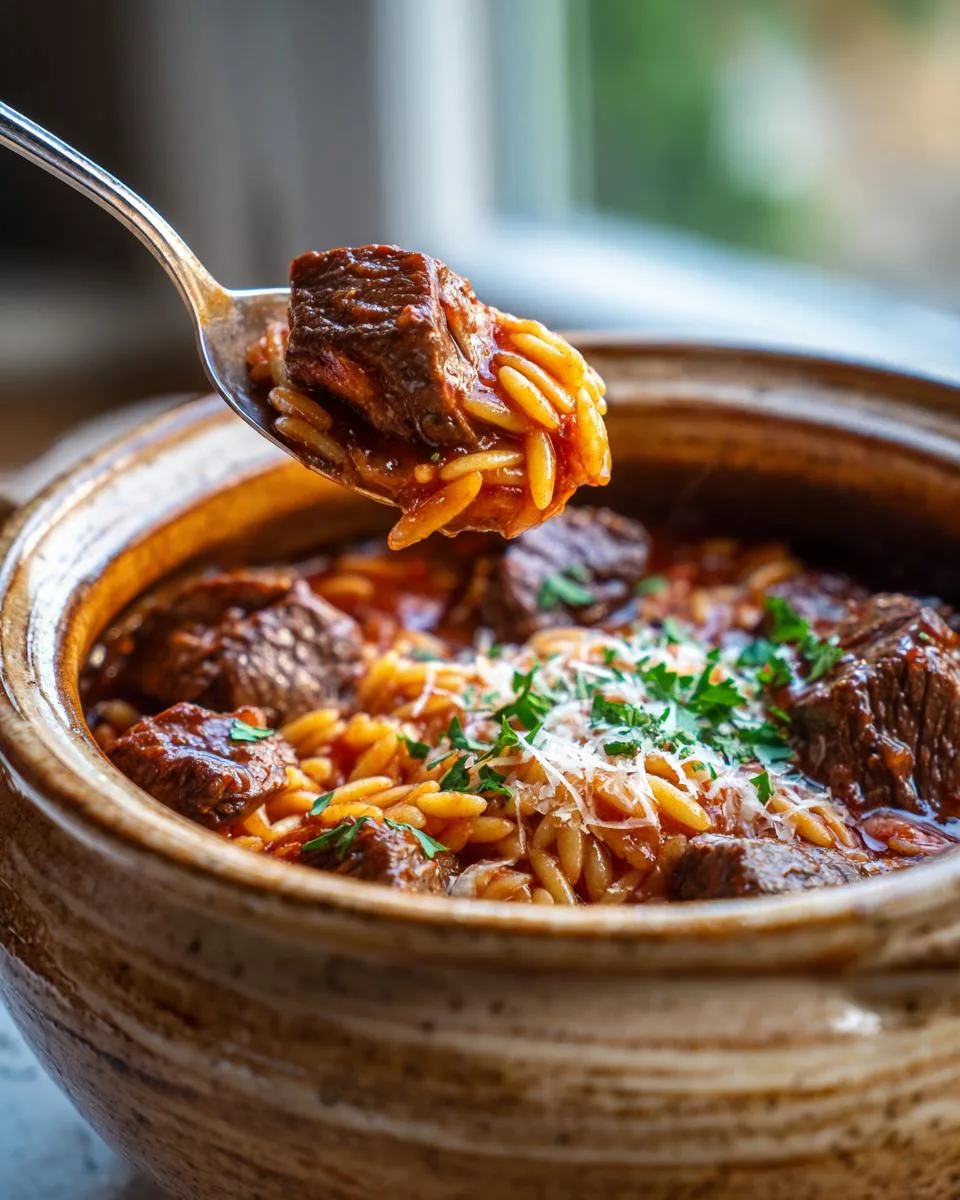
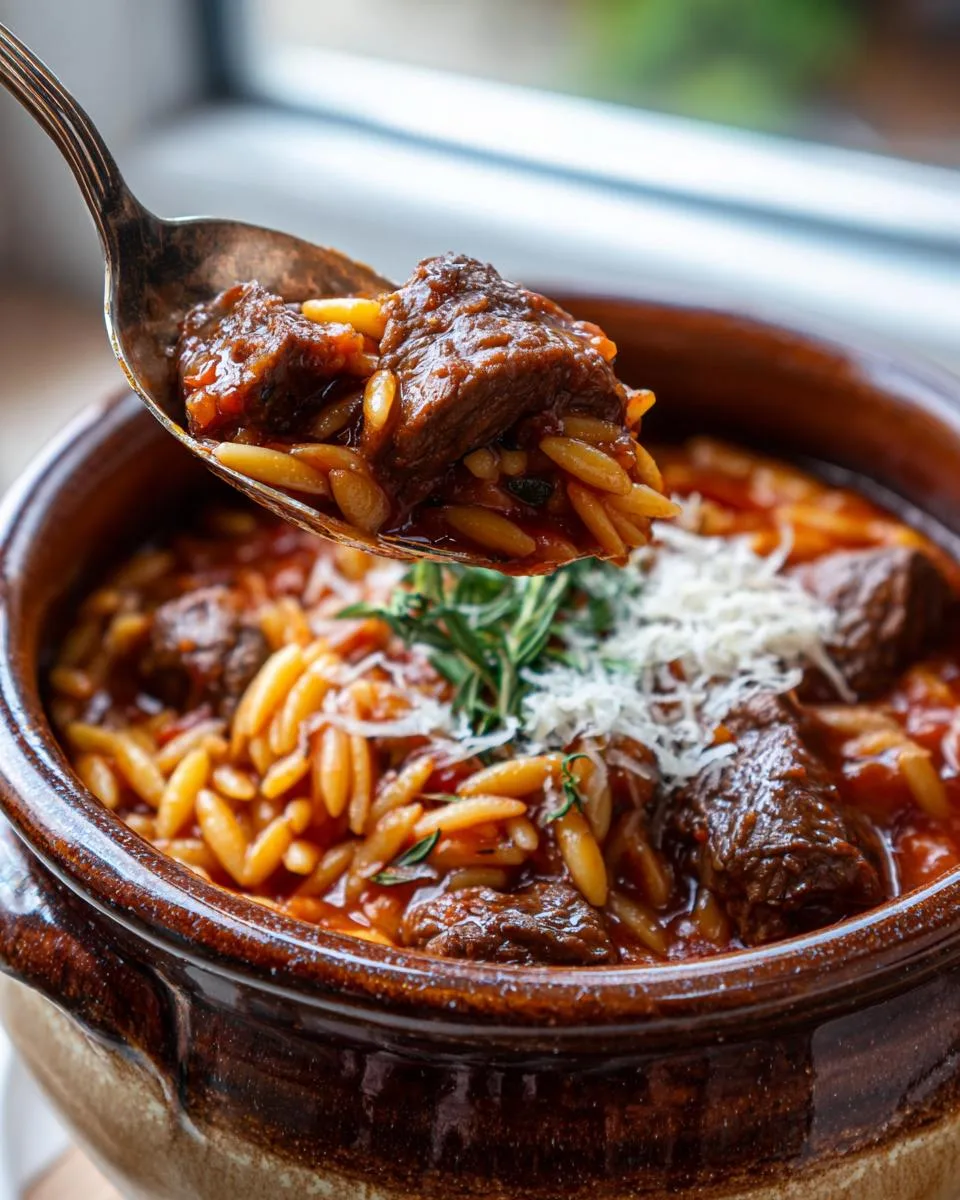
The classic way: Spoon it straight from the pot into deep bowls – you want all that saucy goodness! Top with a generous sprinkle of Kefalotyri or Parmesan (don’t be shy with the cheese – I never am) and a handful of chopped fresh parsley for color. The contrast of warm, rich stew against cool, crisp cheese is heavenly.
My must-have sides:
- Horiatiki salad: That classic Greek salad with tomatoes, cucumbers, olives, and feta cuts through the richness perfectly. I swear the flavors were made for each other.
- Warm pita or crusty bread: For sopping up every last drop of sauce (my brother always argues over who gets the last piece!)
- Simple roasted veggies: When I’m feeling fancy, I’ll roast some zucchini, eggplant, and bell peppers with olive oil and oregano to serve alongside.
For special occasions: Sometimes I’ll go all out with small bowls of toppings – extra grated cheese, chopped red onions, a dollop of tangy Greek yogurt, or even some kalamata olives on the side. Let everyone customize their bowl just how they like it!
One word of advice? Make extra. Between seconds and people sneaking bites straight from the pot, this dish disappears faster than you’d think. And if you’re anything like me, you’ll want leftovers for lunch tomorrow – the flavors get even better overnight!
Storing and Reheating Beef Giouvetsi
Okay, confession time – I rarely have leftovers because this dish disappears so fast in my house! But when I do manage to save some, here’s how I keep it tasting just as delicious as the first day:
Short-term storage: Let the Giouvetsi cool slightly (but not completely – food safety first!), then transfer to an airtight container. It’ll keep beautifully in the fridge for up to 3 days. I like to drizzle a tiny bit of olive oil over the top before sealing – helps prevent the orzo from drying out.
Reheating magic: When you’re ready to enjoy your leftovers, add a splash of beef broth or water (about 2 tablespoons per serving) before reheating. This brings back that saucy consistency we love. My favorite methods:
- Stovetop: Warm gently over medium-low heat, stirring occasionally and adding more liquid if needed
- Microwave: Cover loosely and heat in 30-second bursts, stirring between each
Freezing tips: Want to freeze? Skip the orzo – it gets mushy when thawed. Instead, freeze just the beef and tomato sauce portion. When ready to eat, thaw overnight in the fridge, then simmer while cooking fresh orzo separately. Mix together right before serving.
Pro tip from my trial-and-error: If your reheated Giouvetsi seems a bit thick, don’t panic! Just stir in a little warm broth or water until it reaches your perfect consistency. The flavors will still be incredible – maybe even better than day one!
Beef Giouvetsi FAQs
I’ve gathered all the questions I get asked most about making this comforting Greek dish – plus some I wish someone had told me when I first started cooking it!
What’s the best cut of beef for Giouvetsi?
Hands down, beef chuck is my winner. It’s got the perfect balance of meat and fat that breaks down beautifully during slow cooking. Stew meat works too, but I find chuck consistently gives me the most tender results. Whatever you choose, make sure it’s cut into 1-inch cubes – too big and it won’t cook evenly, too small and it might overcook.
Can I make this ahead?
Absolutely! In fact, the flavors deepen wonderfully overnight. Just store it covered in the fridge for up to 3 days (though mine never lasts that long). When reheating, add a splash of broth or water to bring back that saucy consistency.
Is freezing an option?
Yes, but with one important tip: freeze just the beef and sauce portion without the orzo. Pasta tends to get mushy when frozen and thawed. When you’re ready to eat, thaw the sauce overnight in the fridge, then simmer while cooking fresh orzo separately. Mix them together right before serving – tastes almost like fresh!
My sauce is too thin/thick – help!
Don’t panic! If it’s too thin after adding the orzo, just let it simmer uncovered a bit longer until it reduces. Too thick? Stir in warm broth or water a tablespoon at a time until it reaches your perfect consistency. Remember, the orzo will continue absorbing liquid even off the heat.
Can I use a different pasta?
While you technically could substitute, orzo is really the star here. Its rice-like shape and texture soak up the sauce perfectly. If you must switch, try small pastina or even risotto rice – but expect a different final texture.
Is this dish spicy?
Not at all! The warmth comes from cinnamon and allspice, not heat. It’s more aromatic than spicy – perfect for kids and spice-averse eaters. If you do want a kick, I sometimes add a pinch of red pepper flakes when sautéing the onions.
Nutritional Information
Now, let’s talk numbers – but remember, these are just estimates! The actual nutrition will vary depending on the exact ingredients and brands you use. Here’s the breakdown per serving (about 1 generous cup):
- Calories: Around 450 (perfect for a hearty meal!)
- Protein: 30g (all that beef keeps you full for hours)
- Carbs: 40g (mostly from the orzo – complex carbs for energy)
- Fat: 18g (that’s where all the flavor comes from!)
- Saturated Fat: 6g (moderation is key)
- Fiber: 3g (thanks to the tomatoes and onions)
- Sugar: 5g (mostly natural from the tomatoes)
- Sodium: 600mg (use low-sodium broth if watching salt intake)
A quick note from my kitchen to yours: I’m not a nutritionist, and these values can change based on things like how much cheese you sprinkle on top (no judgment here!) or whether you use homemade vs store-bought broth. The most important thing? That it tastes amazing and makes you happy!
Ready to Make Your Own Beef Giouvetsi?
There you have it – everything I’ve learned through years of making (and devouring) this incredible Greek comfort food! From my yia-yia’s secret spice blend to my own hard-earned tips for perfect orzo, I’ve shared all my tricks to help you create Beef Giouvetsi that’ll wow your family just like mine.
I want to hear all about your Giouvetsi adventures! Did you stick to the classic recipe or put your own spin on it? Maybe you discovered a new favorite cheese topping or perfected the simmer time? Snap a photo of your creation and tag me – nothing makes me happier than seeing this dish bring people together just like it has for generations in my family. You can also follow along with more family recipes on our Facebook page!
Now grab that Dutch oven and get cooking! Trust me, once that amazing aroma fills your kitchen, you’ll understand why this dish has been a Greek favorite for so long. And when everyone at your table goes quiet because they’re too busy eating to talk? That’s when you’ll know you’ve nailed it. Happy cooking! If you’re looking for more delicious dinner ideas, check out our full collection of recipes.