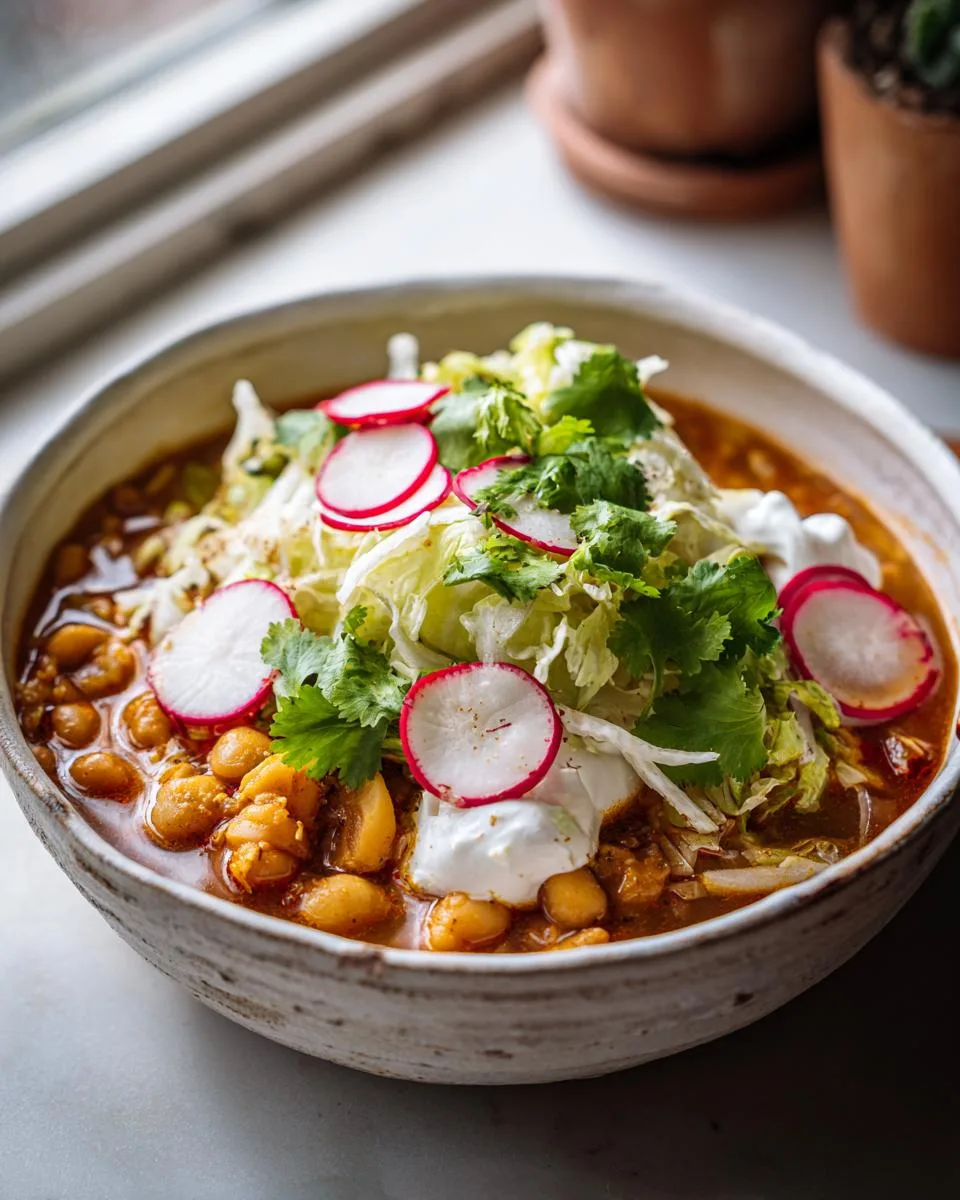
There’s something magical about the way a Vegetarian Slow-Cookie Pozole fills your home with the rich aromas of ancho chile and tomatillos as they simmer away. This Mexican comfort food transforms simple ingredients into a hearty, flavorful soup that’s as nutritious as it is satisfying (and the easiest meal you’ll make). I love how the slow-cooking process develops deep, complex flavors—it’s impossible to resist a hearty bowl of this pozole on a cold day. Keep it concise (approx. 100 words).
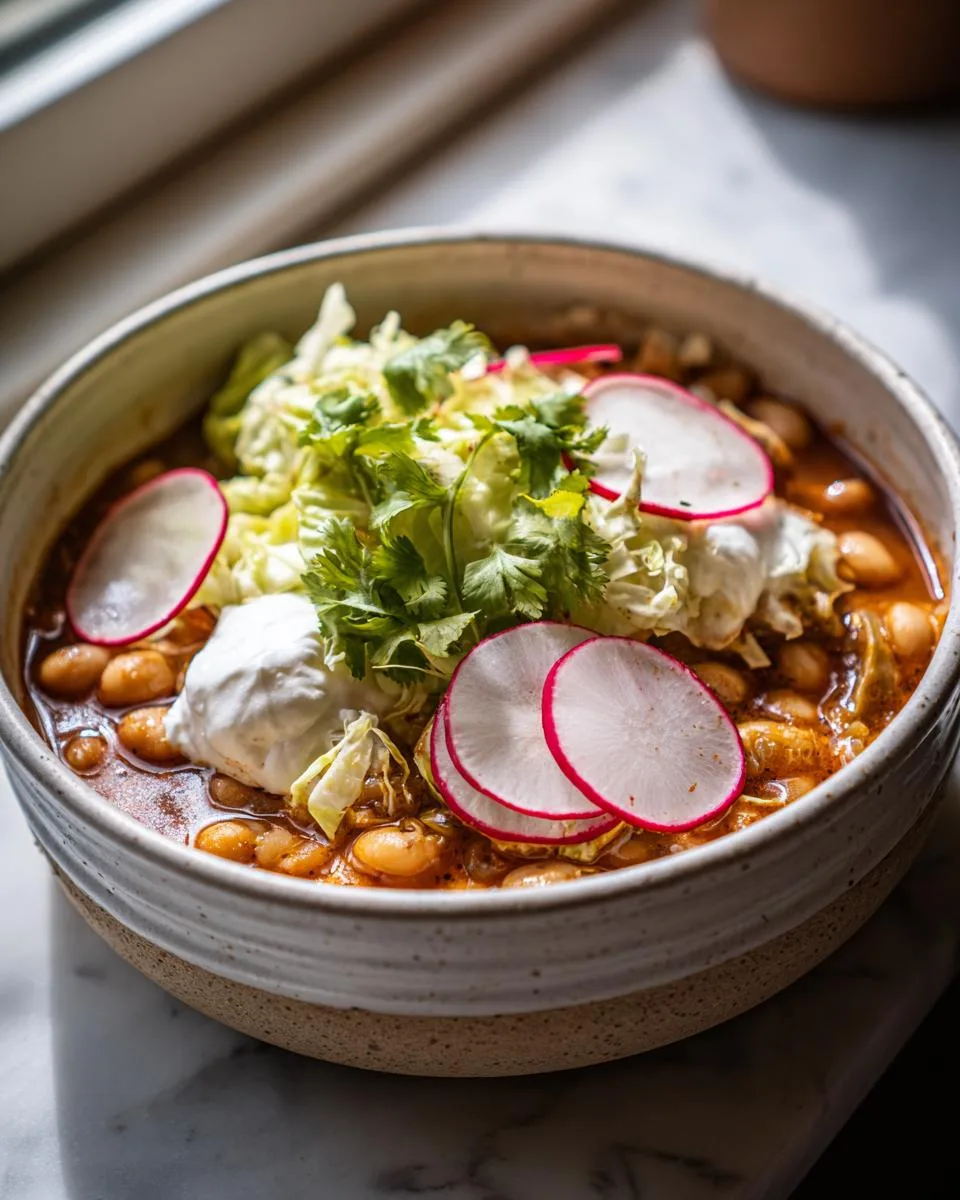
Table of Contents
Table of Contents
Why You’ll Love This Vegetarian Slow-Cooker Pozole
• Flavorful and hearty hominy-based soup
• Easy to prepare—just set and forget in the slow-cooker (no fuss)
• Healthy and nutritious vegetarian meal
• Comfort in a hearty bowl
• Flavor that develops as it simmered to perfection
Ingredients for Vegetarian Slow-Cooker Pozole
2 cups vegetable broth
1 ¼ cups canned hominy, rinsed
6 tablespoons tomatillo salsa
1 lime, juiced
1 teaspoon salt
1 cup shredded cabbage
¾ cup sour cream
½ cup sliced radishes
1 cup chopped fresh cilantro
How to Make Vegetarian Slow-Cooker Pozole
Break down instructions into clear, numbered steps. Include timing (e.g., “cook on Low for 7–8 hours”). Address potential confusion points, like parchment paper placement.
Preparing the Beans and Vegetables
1. Drain beans and transfer to a 6-quart slow cooker.
2. Heat oil in a large skillet over medium heat.
3. Add onions and poblanos; cook, stirring occasionally, until tender, about 4 minutes.
4. Add garlic, ancho chile powder, chili powder, oregano, and cumin; cook, stirring, until fragrant, about 1 minute.
5. Transfer the mixture to the slow cooker.
Slow Cooking the Pozole
6. Stir in broth and hominy.
7. Cover with the lid and cook on Low for 7 to 8 hours.
8. Discard the parchment paper.
Finishing Touches and Serving
Stir salsa, lime juice, and salt into the pozole.
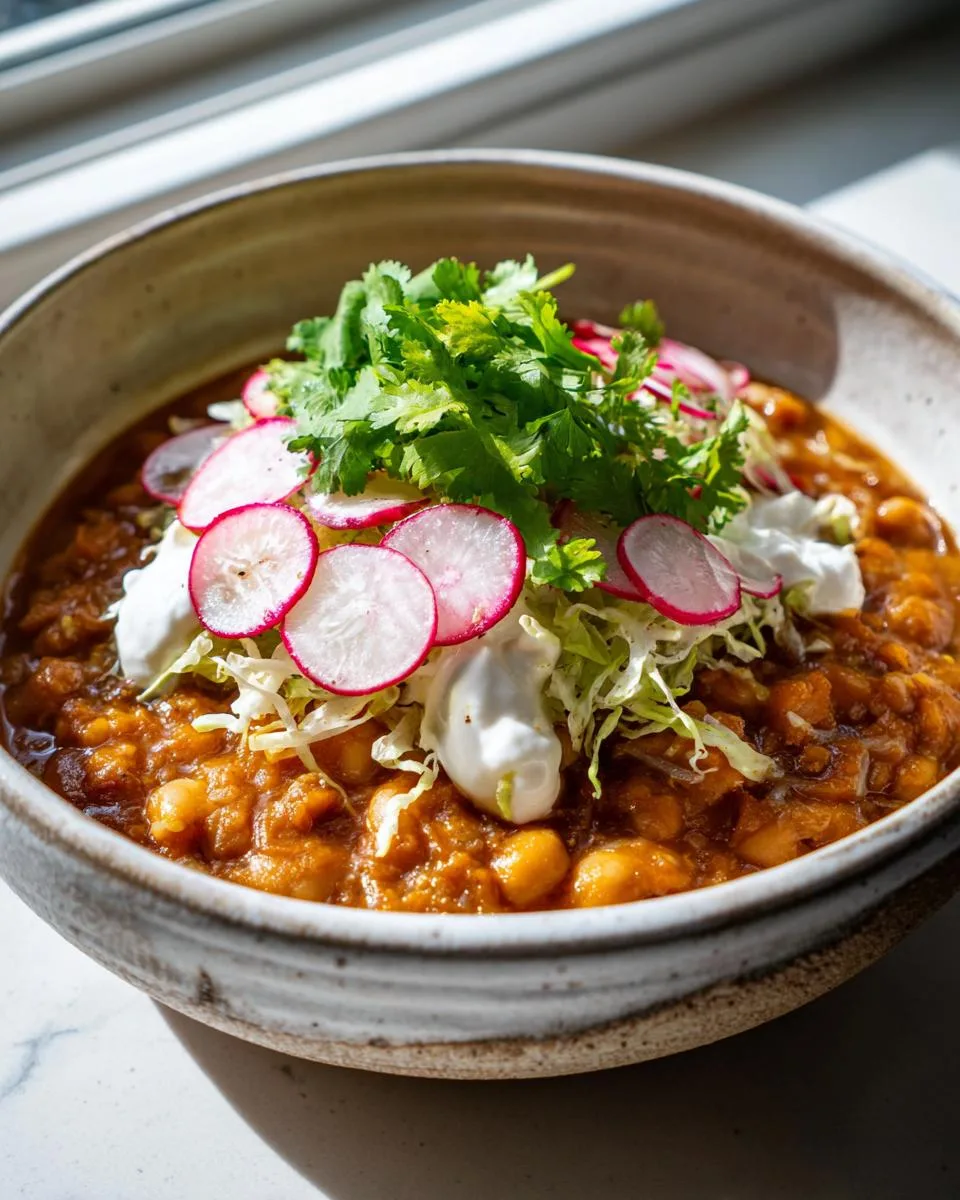
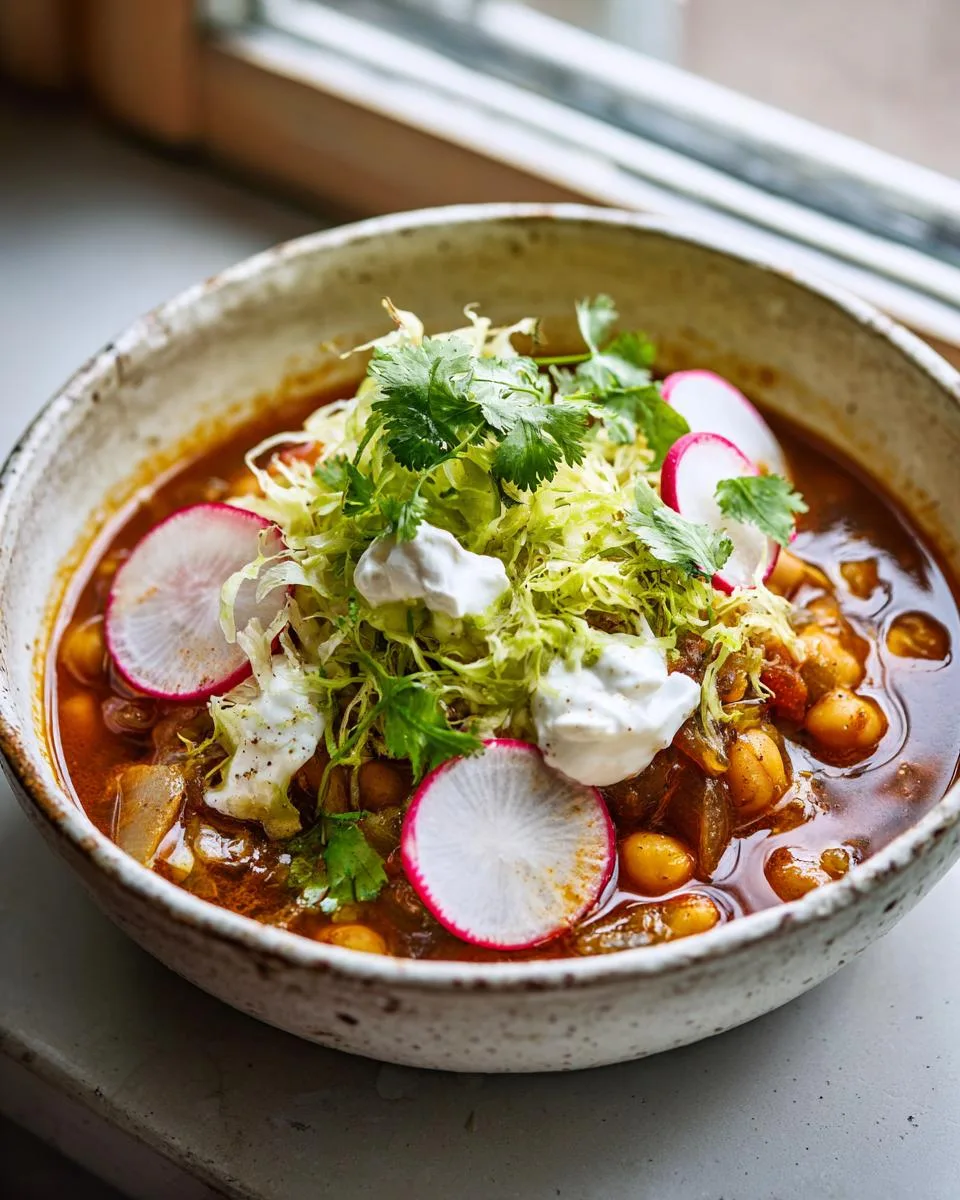
Serve topped with cabbage, sour cream, radishes, and cilantro.
Print
Vegetarian Slow-Cooker Pozole: A Hearty Mexican Comfort Food
- Prep Time: 15 minutes
- Cook Time: 7-8 hours
- Total Time: 7 hours 15 minutes
- Yield: 6 servings 1x
- Category: Soup
- Method: Slow Cooker
- Cuisine: Mexican
- Diet: Vegetarian
Description
Vegetarian Slow-Cooker Pozole is a hearty and flavorful Mexican soup made with hominy, beans, and a rich blend of spices, slow-cooked to perfection.
Ingredients
- 1 cup dried cannellini beans, soaked overnight
- 1 tablespoon extra-virgin olive oil
- 2 cups chopped yellow onions
- 2 cups chopped seeded poblano peppers
- 3 large cloves garlic, finely chopped
- 1 tablespoon ancho chile powder
- 1 tablespoon chili powder
- 2 teaspoons dried oregano
- 1 teaspoon ground cumin
- 6 cups low-sodium vegetable broth
- 1 ¼ cups canned hominy, rinsed
- 6 tablespoons prepared tomatillo salsa
- 1 tablespoon lime juice
- ¼ teaspoon salt
- 1 cup shredded cabbage
- ¾ cup sour cream
- ½ cup sliced radishes
- ¼ cup chopped fresh cilantro
Instructions
- Drain beans and transfer to a 6-quart slow cooker.
- Heat oil in a large skillet over medium heat.
- Add onions and poblanos; cook, stirring occasionally, until tender, about 4 minutes.
- Add garlic, ancho chile powder, chili powder, oregano, and cumin; cook, stirring often, until fragrant, about 1 minute.
- Transfer the mixture to the slow cooker.
- Stir in broth and hominy.
- Cut a piece of parchment paper to fit inside the slow cooker and press it directly onto the pozole.
- Cover with the lid and cook on Low until the beans are tender, 7 to 8 hours.
- Discard the parchment paper.
- Stir salsa, lime juice, and salt into the pozole.
- Serve topped with cabbage, sour cream, radishes, and cilantro.
Tips for the Best Vegetarian Slow-Cooker Pozole
After making this pozole more times than I can count (and receiving endless compliments from friends), I’ve picked up a few tricks that take this dish from good to knock-your-socks-off amazing.
Don’t skip soaking those beans
I know it’s tempting to just toss dry beans straight into the slow cooker, but trust me – that overnight soak makes all the difference. It cuts down on cooking time and gives you perfectly tender beans every time. No one wants crunchy beans in their pozole! If you forget (we’ve all been there), do a quick soak by boiling them for 1 minute then letting them sit for an hour.
That parchment trick is magic
When I first saw my abuela press parchment paper right onto the pozole, I thought she was crazy. But it’s genius! It creates a seal that keeps all the moisture and flavors locked in. Just make sure it touches the surface – no floating allowed. This little step gives you pozole with restaurant-quality texture.
Taste and adjust at the end
The flavors develop beautifully during cooking, but I always do a final taste test before serving. Sometimes it needs an extra squeeze of lime or pinch of salt. And if you like more heat (like I do), stir in some chopped jalapeños or extra chili powder at this stage. The great thing about pozole is how customizable it is!
Prep garnishes ahead
While the pozole cooks, chop your radishes, shred the cabbage, and get all those pretty toppings ready. Having everything prepped means you can serve immediately when that heavenly aroma tells you it’s done. My family goes wild for the fresh crunch of radishes against the rich soup.
Ingredient Substitutions and Variations
• Swap cannellini for pinto or black beans—all work beautifully in this pozole
• Poblano peppers can be replaced with 1-2 jalapeños for extra heat (remove seeds for milder flavor)
• No tomatillo salsa? Use 1 cup tomatillos, husked and blended with 1 clove garlic
• Vegetable broth can be subbed with mushroom or “no-chicken” broth for different depth
• Cabbage can be swapped with shredded kale or lettuce for crunch (keep it simple and fresh)
Serving Suggestions for Vegetarian Slow-Cooker Pozole
Oh, the joy of ladling out steaming bowls of this pozole to friends and family! Here’s how I love to serve it for maximum enjoyment (and minimal effort – because we’ve already done the hard part with that glorious slow cooking).
The must-have toppings
First, let’s talk garnishes – they’re not just pretty, they add exciting textures and flavors! I always set out bowls of:
- Crisp shredded cabbage (it adds such a nice crunch)
- Cooling sour cream or Greek yogurt
- Peppery radish slices
- Fresh cilantro leaves (don’t skip this – it brightens everything up!)
- Lime wedges for that essential squeeze of acidity
Let everyone customize their bowl – half the fun is in the building!
What to serve alongside
While this pozole is absolutely satisfying on its own, I often pair it with:
- Warm corn tortillas (perfect for dipping and scooping)
- Buttery avocado slices or quick guacamole
- A simple cucumber salad with lime dressing
- Crispy tortilla chips for extra crunch
For a heartier meal, I’ll sometimes add cheesy quesadillas – the melted cheese pairs wonderfully with the spicy broth.
My favorite way to enjoy it
Here’s my secret: I make a big batch on Sunday, then reheat individual portions throughout the week. The flavors get even better after sitting! For lunch, I’ll pack the pozole separately from the garnishes to keep everything fresh. A squeeze bottle of lime juice in my bag means I can brighten it up anywhere. Pure comfort in a thermos!
Storage and Reheating Instructions
One of my favorite things about this pozole is how beautifully it keeps – in fact, I think it tastes even better the next day when all those flavors have really gotten to know each other! Here’s how I store and reheat it to keep that perfect texture and taste.
Refrigerating your leftover pozole
First, let the pozole cool completely – I usually leave it on the counter for about an hour. Then transfer it to airtight containers (I’m partial to glass ones because they don’t absorb smells). It’ll keep beautifully in the fridge for 3-4 days. Pro tip: Store the broth and toppings separately if you can – the cabbage and radishes stay crisper that way.
Reheating like a pro
When you’re ready to enjoy your leftovers, you’ve got options:
- Stovetop: My preferred method! Pour what you need into a pot and warm it gently over medium-low heat, stirring occasionally. If it seems too thick, add a splash of broth or water.
- Microwave: Perfect for single servings. Use a microwave-safe bowl, cover loosely, and heat in 1-minute bursts, stirring in between. Careful – it gets hot fast!
Either way, wait to add fresh garnishes until after reheating – nobody wants soggy radishes!
Can you freeze it? Absolutely!
This pozole freezes like a dream! I often double the batch just to stock my freezer. Here’s my method:
- Cool completely (important to prevent freezer burn)
- Portion into freezer-safe containers or bags – I do individual servings for easy lunches
- Leave about an inch of space at the top for expansion
- Label with the date (it keeps for 3 months beautifully)
When you’re ready, thaw overnight in the fridge or use the defrost setting on your microwave. Reheat as usual, and it’ll taste just as wonderful as the day you made it!
Frequently Asked Questions
Can I use canned beans instead of dried?
Absolutely! While I love the texture of soaked dried beans (and they’re more budget-friendly), canned beans work in a pinch. Drain and rinse two 15-oz cans of cannellini beans, then add them to the slow cooker during the last hour of cooking so they don’t get mushy. You’ll lose some of that slow-cooked bean creaminess, but it’ll still be delicious!
What’s the deal with the parchment paper?
I know it seems odd, but that parchment paper is my secret weapon! Pressing it directly onto the surface creates a seal that prevents evaporation, keeping all that wonderful broth right where it belongs. My abuela taught me this trick – she says it makes the difference between good pozole and great pozole. Just cut a circle slightly smaller than your slow cooker’s diameter.
How spicy is this pozole?
As written, this recipe has a mild-medium heat level – perfect for most palates. The poblanos add flavor more than fire, and the ancho chile powder brings warmth rather than burn. That said, I’m a spice lover, so I often add a diced jalapeño with the onions or serve with hot sauce on the side. The beauty of pozole is how easily you can adjust the heat to your taste!
Can I make this in an Instant Pot?
You bet! I’ve done it both ways. For pressure cooking: sauté veggies as directed, then add everything except garnishes. Cook on high pressure for 35 minutes with natural release. The beans won’t be quite as creamy as the slow-cooked version, but it’s a fantastic shortcut when you’re short on time. Just remember – no parchment paper needed for pressure cooking!
Why does my pozole taste better the next day?
Isn’t that magical? All those spices, vegetables, and beans continue mingling as they sit, creating deeper, more complex flavors. The hominy absorbs more of the broth too, giving it that perfect tender-yet-chewy texture I crave. This is why I always make extra – leftover pozole might just be better than the first serving!
Nutritional Information
Here’s the breakdown per serving (because yes, I actually measured my portions – once – before diving into seconds!):
- Calories: About 320
- Protein: 12g (those beans pack a punch!)
- Carbs: 45g (mostly from that wonderful hominy)
- Fiber: 10g (hello, happy digestion!)
- Fat: 9g (and most of it’s the good kind from olive oil)
Important note: Nutritional values are estimates and vary based on ingredients used. Your sour cream dollop might be bigger than mine (no judgment!), and that’s okay!
Now that you’ve got all the details – go make this pozole and tell me how it turns out! Tag me on Instagram with your beautiful bowls – I live for those garnished-to-the-max photos. You can also find more inspiration on our Facebook page!